
Why We Swapped to the DJI Air 3S for a 50-Metre Railway Drone Survey
The DJI Air 3S is a mid-weight drone built for jobs where you need to stay well back from a subject but still come home with sharp, usable footage. It’s the drone that now handles trackside and infrastructure survey work in my fleet that the Mini 5 Pro, brilliant as it is for most jobs, simply can’t.
Quick answer: When you need to stay 50 metres from a subject, such as a railway track, but still need close-up detail, the answer isn’t to fly closer — it’s a longer lens. The DJI Air 3S’s 70mm equivalent telephoto and digital zoom holds resolution where smaller drones turn to pixelated noise, and at under 900g it avoids the overflight permissions a heavier drone like the Mavic 4 would trigger on a job that crosses public land.
Why didn’t the Mini 5 Pro work for this job?
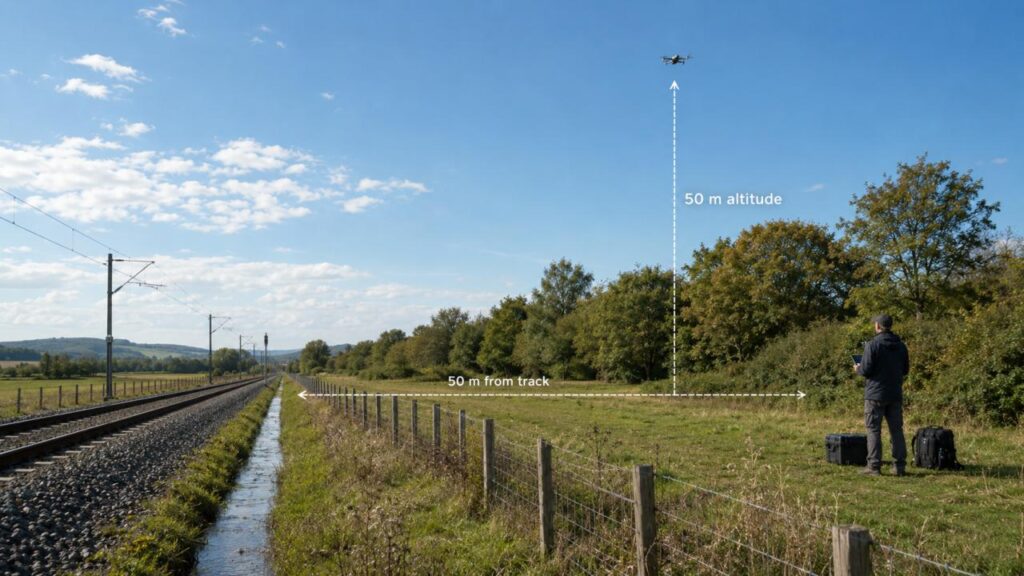
We were filming a channel running alongside a railway track for an engineering client, who needed footage clear enough to use for a survey. The brief had two requirements that pulled against each other: a close-up view of the subject, but a minimum 50-metre standoff from the track itself.
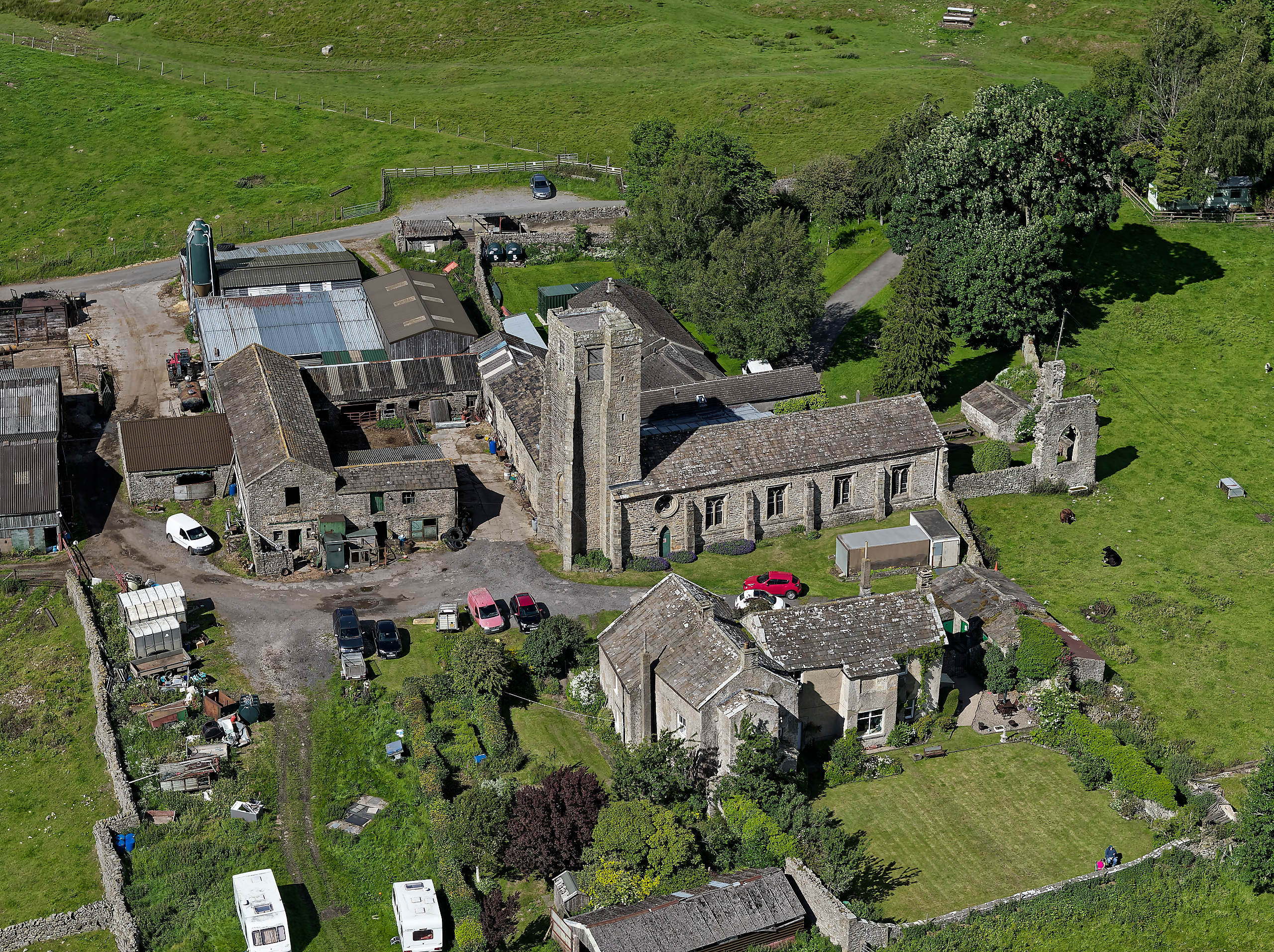
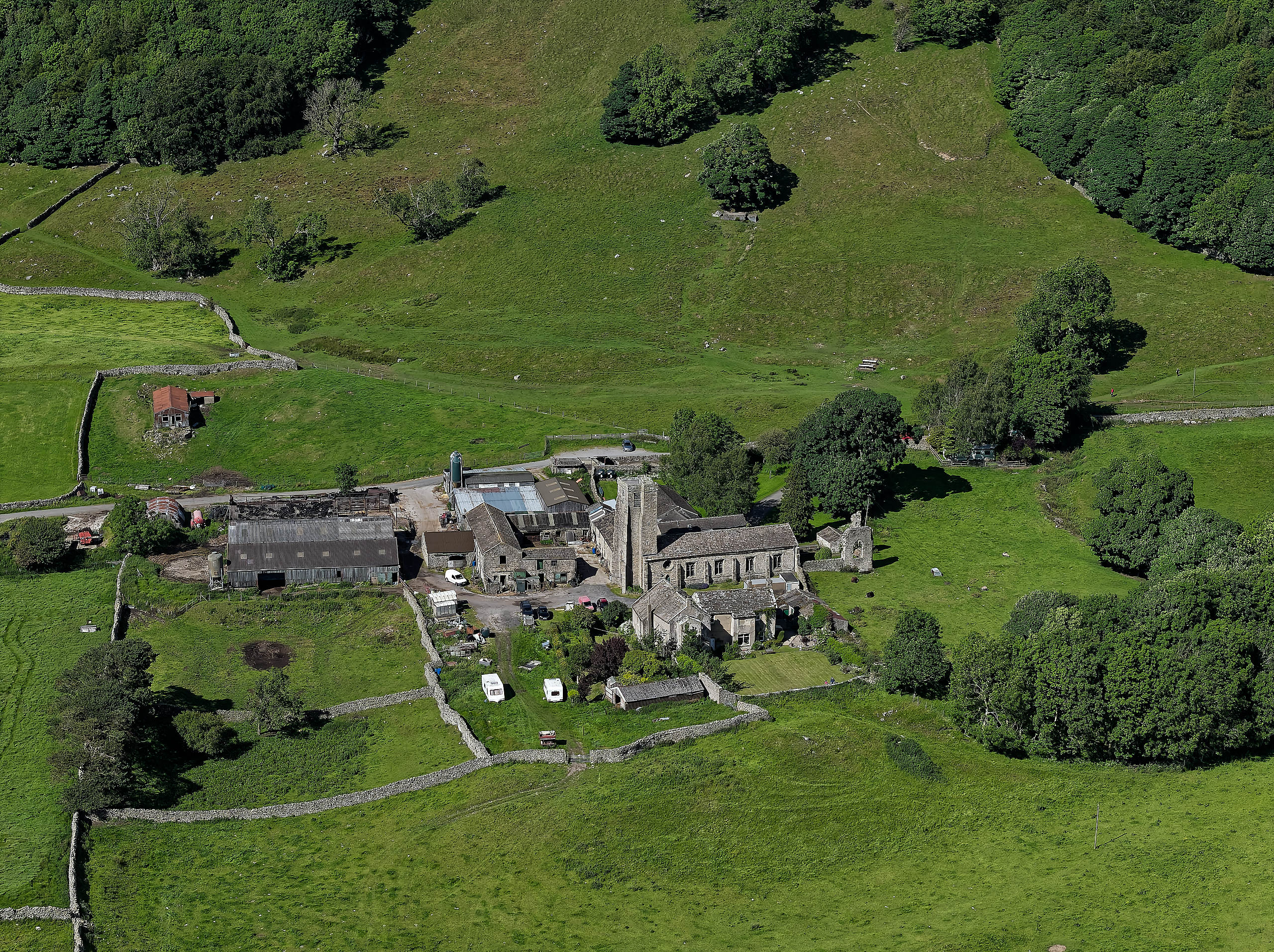
To illustrate this, here is the same drone position using the two different lenses. This is not part of the job, but was taken in Swaledale in North Yorkshire.
This is a 70-millimeter lens.
This is the 24mm lens.
The Mini 5 Pro handled the flying part fine — distance and positioning weren’t the issue. The problem was the lens. Zoomed in digitally to bridge that 50-metre gap, the footage dissolved into pixelated noise rather than anything an engineer could actually use. I sent the client six versions at increasing zoom levels, and the further in I went, the worse the detail got. By the point you could actually see the track, it was just a grey mess.
Why not fly closer, or just use a Mavic instead?
Two options were on the table. One was contacting Network Rail directly, who can permit authorised pilots to operate within 25 metres of a track under strict conditions. Getting that kind of permission isn’t always straightforward — it depends on the location and the job.
The more practical option was staying at 50 metres but closing the gap with the lens instead of the aircraft. The obvious candidate was the Mavic series — the Mavic 3 or 4 both carry a much longer zoom. But the project involved flying for miles alongside the track, over buildings and public spaces, not just open fields. A Mavic’s weight pushes it into a stricter category that, in practice, would mean seeking permission to overfly every property along the route. Not realistic for this job.
That’s what brought the Air 3S into the picture — the current middle ground in DJI’s range, and a properly useful tool for civil engineering and infrastructure survey work generally.
How does the Air 3S actually compare?
| Drone | Weight | Tele lens | Best suited to |
|---|---|---|---|
| DJI Mini 5 Pro | Under 250g | None (single 24mm lens) | Close-range and general survey work |
| DJI Air 3S | 724g | 70mm equivalent, 3-9x digital zoom | Standoff distances of 50m+ needing genuine detail |
| DJI Mavic 4 | Over 900g | ~169mm equivalent, longer optical reach | Maximum zoom where overflying people/buildings isn’t a factor |
The Air 3S’s 70mm lens meant zooming in just two times on camera gave footage that was sharp and usable — a world away from the grey mess the Mini 5 Pro produced at the same distance. The engineers were happy with it straight away.
What does the CAA’s 2026 rule change mean for drones like the Air 3S?
From January 2026, the rules changed in a way that matters here. UK1 class-marked drones weighing less than 900g, which covers the Air 3S, can now fly in the Open Category’s A1 subcategory — meaning flight over uninvolved people is permitted (never over crowds), without needing separate overflight permission. That threshold used to sit at 250g, so this is a genuine widening of what a drone like the Air 3S can do on a job like this one.
Cross that 900g line, as the Mavic 4 does, and a drone defaults to the more restrictive A3 subcategory — meaning permission is needed to overfly people and buildings. On a job following miles of track through built-up areas, that’s the difference between a straightforward survey and a logistical headache.
Is it legal to fly a drone near a railway track in the UK?
Not without authorisation. Network Rail is clear that flying a drone on, over, or within 50 metres of the railway without their permission is a criminal offence — and they’ve prosecuted for it, with one case resulting in a £2,500 penalty. Authorised pilots with the right CAA approvals can apply to operate closer, but the 50-metre standoff is the default for everyone else.
What’s in the fleet now?
This job ended up sorting out my drone lineup nicely, each one with a clear job to do:
- DJI Mini 5 Pro — anything close-range. Shares the same main camera as the Air 3S, so image quality is consistent across both.
- DJI Avata 2 — ultra close-up and creative FPV-style footage.
- DJI Air 3S — the standoff specialist. Steady in higher winds than the Mini 5 Pro, strong in low light, and handles long exposure well too.
Sometimes keeping a project alive means buying the right tool rather than making do with what’s already in the bag. That weekend cost me a new drone and a leisure battery for the car — but the job got finished properly, and the fleet’s better for it.
FAQ
Can I fly a drone near a railway track in the UK?
Not without authorisation. Network Rail states it’s a criminal offence to fly a drone on, over, or within 50 metres of the railway without their permission, and pilots have been prosecuted — one case carried a £2,500 penalty. Authorised contractors with the right CAA approvals can apply to get closer.
What’s the difference between the DJI Mini 5 Pro and the DJI Air 3S?
Both share a similar main camera, but the Air 3S adds a second 70mm equivalent telephoto lens with 3-9x digital zoom. For close-up detail from a distance, the Air 3S holds resolution where the Mini 5 Pro’s single lens turns to pixelated noise once you zoom in digitally.
Do I need permission to fly a drone under 900g over people in the UK?
From January 2026, UK1 class-marked drones under 900g, like the Air 3S, can fly in the Open Category’s A1 subcategory, which permits flight over uninvolved people (never crowds) without separate overflight permissions. Heavier drones, like the Mavic 4, default to the more restrictive A3 subcategory.
Why not just use the most powerful drone available for every job?
Weight changes what’s legally allowed, not just what’s possible. A heavier drone can zoom in further, but crossing the 900g threshold means losing the right to overfly people and buildings without extra permissions — a real problem on a job that follows a track through built-up areas.
Cheers,
Ade

