Photography for construction bids is the set of project images you put into a tender, prequalification questionnaire or capability statement to show you have done this kind of work before, safely and to a good standard. It sits alongside your method statements and case studies, and it shows what the writing can only describe.
I’m Ade, a commercial and construction photographer in Leeds with a civil engineering degree. Most of my work is on live sites across the construction industry and infrastructure. This is what I would put in a bid, what I would check first, and what it costs to get a proper set.
Quick answer: what photos should go in a construction bid?
- Real photos of your own work, ideally on jobs similar to the one you are bidding for.
- People at work, in the right PPE, so the evaluator can see who would turn up.
- One clear overview of each project, often from the air, to show scale and context.
- Close-up detail that shows quality: fixings, finishes and tidy temporary works.
- A finished result, with a caption saying what the job was and what your part in it was.
Why do photographs matter in a construction bid?
Anyone can write “we deliver to programme and to a high standard”. A photograph of the crew fitting hoarding, a surveyor setting out, or a finished lift entrance is harder to argue with. Good construction photography shows the evaluator the kind of work, the kind of construction site and the kind of team in a few seconds.
Think of your bid photos as a small portfolio that showcases your best work for that particular client. It also takes pressure off your writing. A bid answer that points to a clear image and a one-line caption can say less and still land.
What kinds of photos work best in a bid?
| Type of photo | What it shows the evaluator | Where it helps |
|---|---|---|
| People at work | Competence, PPE discipline, who will be on site | Team and method sections |
| Overview from above | Scale, access, how the job sits in its surroundings | Case studies |
| Site set-up | Tidy, careful working in a live environment | Safety and logistics answers |
| Detail and finished result | Quality of workmanship and what the client received | Case studies and capability statements |
How do photos of people at work help a bid?
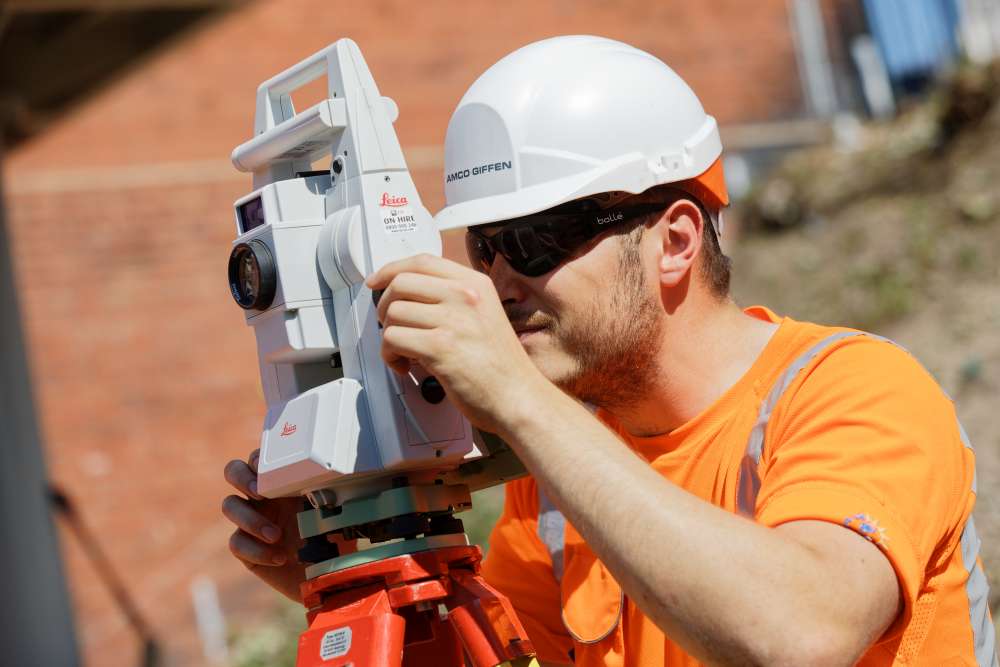
A tender panel is not only buying a method. It is buying the people who will turn up. A close, well-lit photo of a surveyor setting out with a total station says more about care than a paragraph on “our experienced team”.
Look at the details in the frame: clean PPE, the right kit, one person focused on one job. Those are the small things an evaluator reads without realising it.
How does an aerial view help a construction bid?
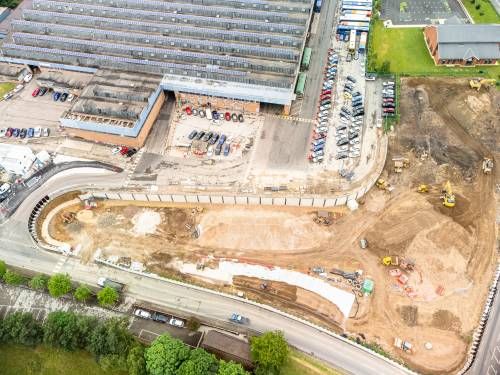
A drone photo shows what the ground cannot: how the job connects to everything around it. In this one, a new brick lift tower sits beside the track, the platform and the footbridge, which is hard to explain in words and obvious in a single frame.
Aerial work needs proper planning and permissions, particularly near a live railway. I hold a CAA drone licence and plan each flight before I arrive. There is more on this in drones in construction photography, and on my drone photography page.

Why show site set-up and safety in a bid?
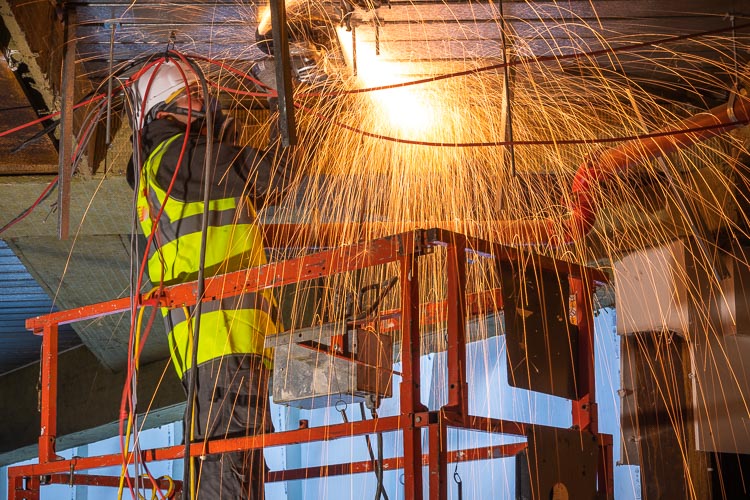
Evaluators look closely at how you work in public places and live environments. A crew fitting timber hoarding and checking the line with a spirit level shows tidy, careful set-up before the main works even start.
It also tells the reader something a method statement cannot: that the people doing the work take pride in how it looks.

How many photos does a bid need, and where do they go?
There is no fixed rule, but this is what I would aim for:
- Cover or introduction: one strong image that sums up the work you do.
- Each case study: three to five images: an overview, one or two with people, and a detail or finished shot.
- Method or safety answers: one image that backs up the point you are making.
- Captions: a line on each saying what the job was, where it was, and what you delivered.
Check the file size limits on the tender portal before you export. A great photo that will not upload is no use to anyone.
What should you check before a photo goes into a bid?
- Permission: make sure the client or principal contractor is happy for the image to be used.
- People: check that anyone recognisable is happy to appear.
- Safety: make sure PPE is correct and nobody is shown working unsafely.
- Security: check that screens, drawings, access details and sensitive site layouts are not visible.
- Accuracy: only claim work you actually delivered.
Should you use site team photos or hire a photographer?
Phone photos from your own team are good for the day-to-day record, and I would encourage them. I cover that in construction photo documentation.
Bid images are a different job. They are planned, shot in good light, and cover people, detail and the aerial view. Most construction companies end up with a mix: the team keeps the record, and a photographer builds the library.
When is the right time to book a photographer for a bid library?
While the work is live. You cannot recreate a hoarding going up or a crew mid-task once the job has finished.
A single visit can serve several needs at once: bids, your website, case studies, recruitment and other marketing material. I plan it around your access windows and programme. More on how I work is on my construction photography page.
How much does photography for a construction bid cost?
| Option | Starting price | What it covers |
|---|---|---|
| Short commercial shoot | From £450 | Up to two hours at one local site |
| Half-day assignment | From £650 | Up to four hours on site |
| Full-day assignment | From £950 | Up to eight hours on site |
| Drone photography | From £350 | Professionally edited aerial photographs |
Most assignments include planning, photography, professional editing, electronic delivery and normal business usage. Travel and specialist requirements are quoted before booking. The full list is on the pricing page.
Frequently asked questions
What photos should I include in a construction bid?
Real photos of your own work, ideally on jobs similar to the one you are bidding for. Aim for a mix of people at work, an overview of the site, close-up detail and a finished result, each with a short caption.
How many photos should a construction bid have?
There is no fixed number. As a rule of thumb, I would use one strong image on the cover or introduction and three to five images for each case study.
Do drone photos help a construction bid?
They help when scale or context matters, such as infrastructure, large sites or anything the ground cannot show. They need a CAA-authorised operator and proper permission for the site.
Can I use photos that my own site team took?
Usually yes, if the team took them in the course of their work and the client allows the images to be used. Check permission for any identifiable people and for anything security-sensitive in the frame.
How much does photography for a construction bid cost?
Starting prices are from £450 for a short commercial shoot, £650 for a half-day, £950 for a full day and £350 for drone photography. Every job is different, so you get a proper quote before booking.
How long does it take to get the images after a shoot?
It depends on the size of the job. I give you a delivery date when we book, and images arrive by cloud link ready to use.
Want a set of images for your next bid?
Tell me about the job and what the bid needs, and I will let you know what is realistic. You can get in touch here.
Cheers, Ade