Shooting the Milky Way – If at first you don’t succeed…
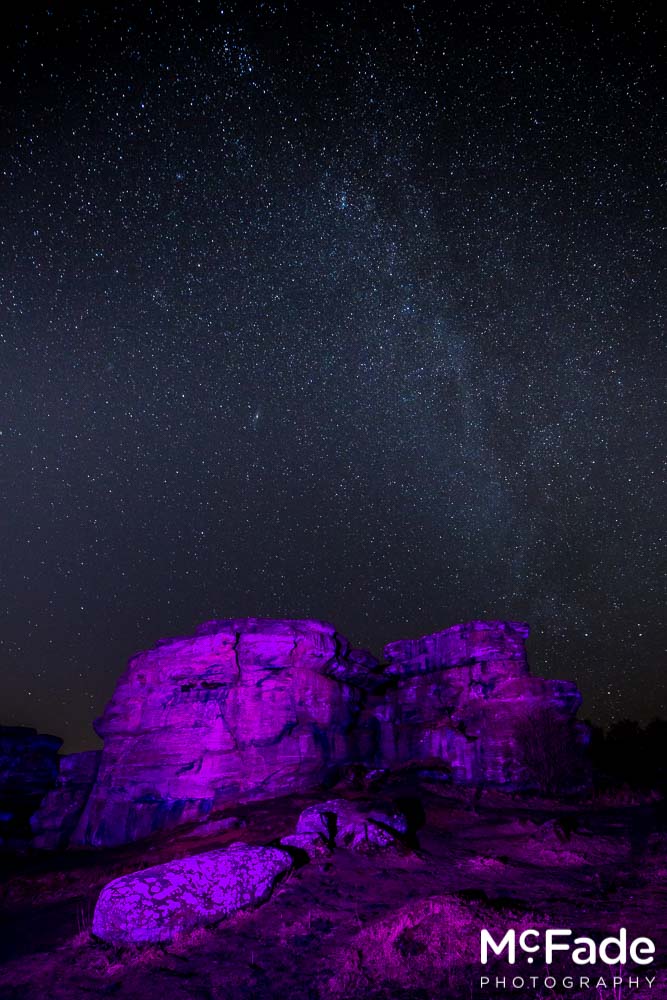
Pack up your bags and go back another night!
That’s what happened with our legendary Brimham Rocks workshop this year – the first run was a wash-out no sign of a star, never mind the milky way. Horizontal rain, cold, and no shelter anywhere saw us calling a halt on proceedings before cameras broke and people got hypothermia!
A few weeks later we returned, and wow – the results were magical!
Perfectly dark – no moon!
 To see the milky way you need to be somewhere with little light… which Brimham is – but also if there is no moon , you’re on to a winner as the sky will be lots darker.
It was a new moon which had disappeared by 7:30.
Techy Bit
With it being so dark, and there was a chance to get the milky way, we decided to expose to capture stars – so this meant:-
- long exposures – 30 seconds
- wider apertures, most at F4 or F5.6
- High ISO – 800 to 1600
This meant that the skies had enough light in them to reveal the stars in post processing.
The Light Painting Bit
 With the cameras set to capture LOTS of light, the light painting was very different to usual – rather than painting for 30 seconds to light boulders, 2-10 was ample, depending on the torch power and gel thickness.
So most of these shots were a quick wash of light, then we stood in darkness for the rest of the 30 seconds!
The Pixel Stick

We took it, but only did a couple of shots with it – still learning what to do with it to get effective shots – and in this location, it wasn’t really adding much to an already-amazing scene!
Sparks
Again, we wanted to let the sky do the talking and help the boulders with a coloruful glow, so we only did a few wire wool wheels!
We did however do a few LED orbs – they were fun.
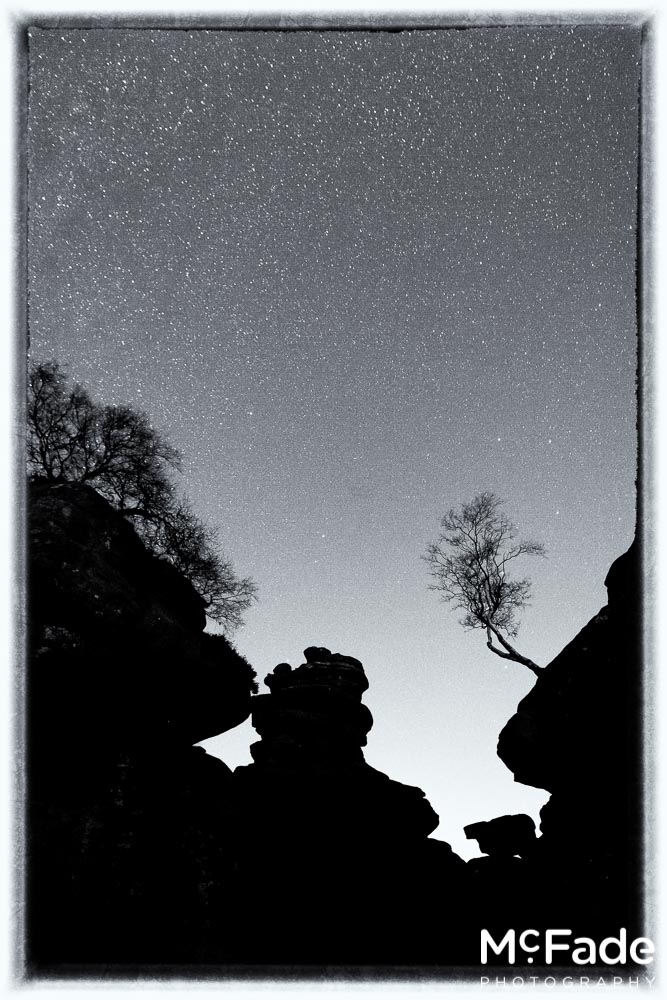
The Photos




Related Posts

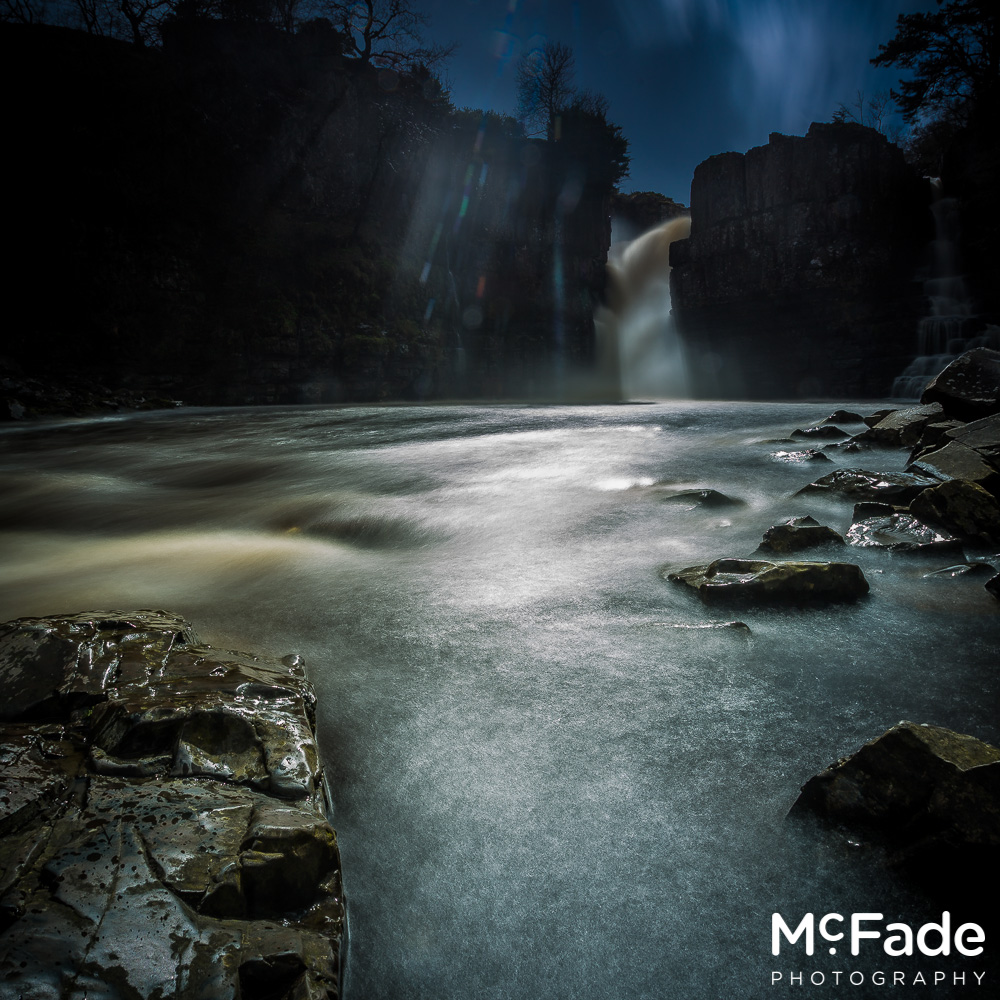
England’s Biggest Waterfall
Top Tips – Sunny Day Cities- Leeds Business – McFade Promo Videos

5 Tips…. Sunny Day Photography- Gauntlet Challenge…. Make Runcorn Look Great!!!!
Try these 3 Things RIGHT NOW to improve your phone photos
Sleeklens Lightroom Workflow – First Impressions
Exploring the Charm of Cambridge: Sepia Photos of Cambridge